
Home › Guides › Wiring a 12V pump
How to Wire a 12V Water Pump to a Battery
Fuse, wire size, switch, and battery run time · Updated October 18, 2026
A 12V water pump has two wires: red and black. Hooking them to a battery takes a few minutes. The part people ask about most is everything in between: where the fuse goes, what size fuse and wire to use, and whether you need a switch. This guide answers all of it.
- Red pump wire to the battery's positive (+), with a fuse on that red wire as close to the battery as you can.
- Add an on/off switch on the red wire, after the fuse, if the pump stays wired in.
- Black pump wire straight to the battery's negative (−).
- Use wire thick enough for the pump's amps and the distance (table below).
What you need
- A 12V DC pump. Check its current draw (amps). It's on the label or in the specs.
- A 12V battery (car, tractor, ATV, or deep-cycle), or a 110V-to-12V power supply.
- A fuse and fuse holder sized for the pump (see the table below).
- Wire thick enough for the pump and the distance, in red and black if you can.
- An on/off switch rated for 12V DC and at least the pump's amps, for a permanent install.
- Connectors: butt splices or ring terminals, plus heat-shrink or electrical tape.
For a portable setup, like a sprayer on an ATV or a pump you carry to the trough, a clip cable is the quick way. Our 12V Battery Clip Cable has alligator clips, a 30 A fuse built in, and ring terminals for the pump's wires. To connect and disconnect, you just clip and unclip.
Step by step
- Work with the power off. Nothing connected to the battery until the last step. Take off rings and watches.
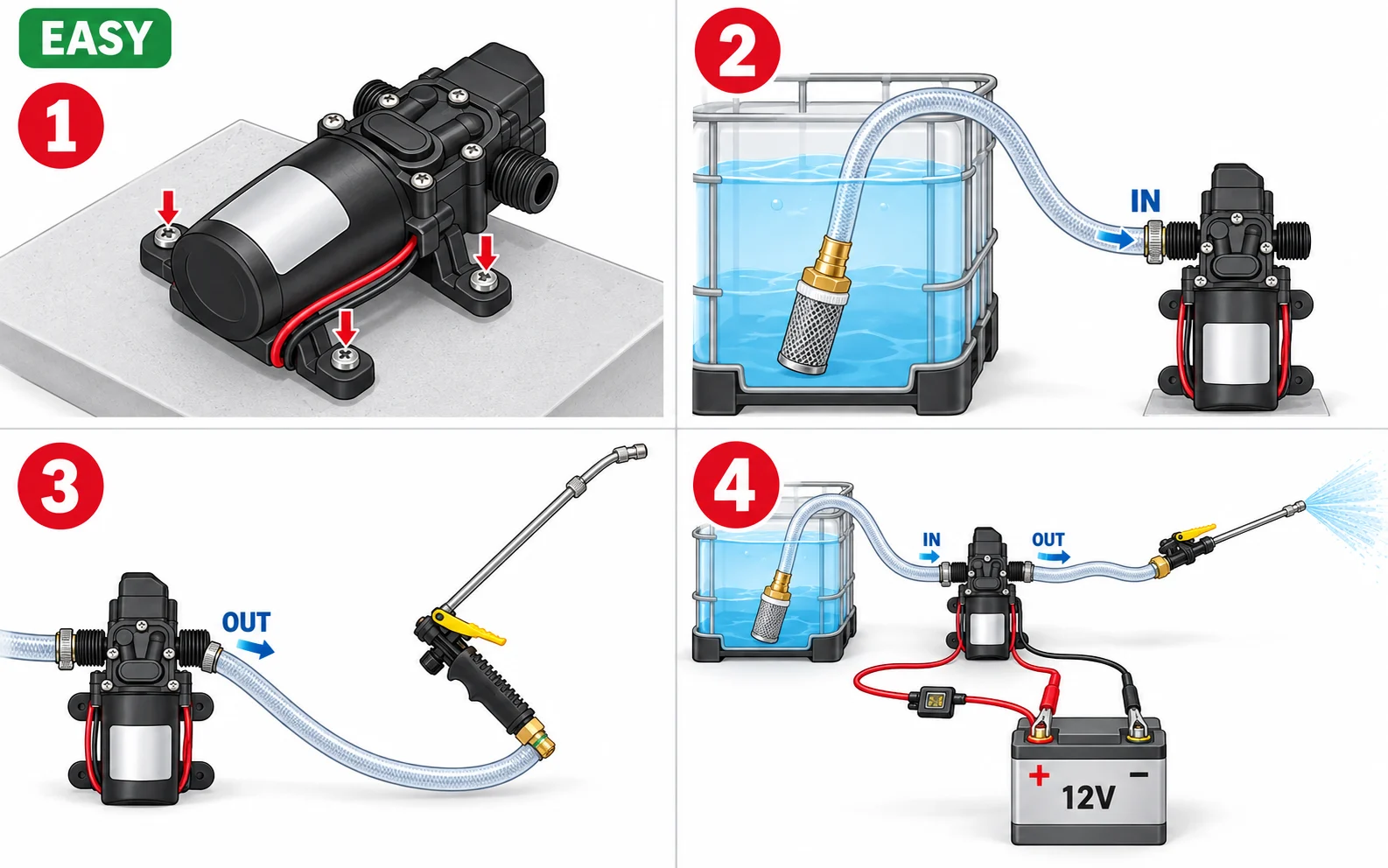
- Mount the pump on a flat, dry spot, screwed down so it can't walk around when it vibrates. Keep the wiring away from where water can drip on it.
- Run the red (+) wire. Put the fuse holder on it as close to the battery as you can, ideally within about 7 in (18 cm). If the wire gets pinched or rubbed through anywhere along the way, the fuse blows instead of the wire overheating.
- Add the switch on the red wire, after the fuse. Use a switch made for 12V DC. A household 120V light switch isn't built for DC current and can fail.
- Connect the red wire to the pump's red lead and the black wire to the pump's black lead. Crimp or solder the joints and cover them with heat-shrink or tape.
- Connect at the battery: red to + first, then black to −.
- Test. Turn the switch on, check that water flows, and look for leaks at the fittings. Then switch off and check that the pump stops.
What size fuse for a 12V water pump?
The fuse protects the wire. It has to blow before the wire gets hot. The rule of thumb: about 1.25 to 1.5 times the pump's running current, and never bigger than what the wire can carry. Pumps pull a little extra for a second when they start, which is why the fuse sits above the running current.
| Pump | Current draw | Fuse |
|---|---|---|
| 12V submersible pumps, 26–30 W (260 GPH, 290 GPH) | About 2–2.5 A | 5 A |
| GOODPUMPS Compact, Models A and B | About 5 A (60 W) | 10 A |
| GOODPUMPS Compact, Models C and D | 6 A (72 W) | 10 A |
| High-Flow pump, 3 GPM | About 7.5 A (90 W) | 15 A |
| GOODPUMPS Heavy-Duty | 10 A (120 W) | 15 A |
| High-Flow pump, 5 GPM | About 18 A (216 W) | 25–30 A |
To work out any other pump: amps = watts ÷ 12. A 60 W pump draws about 5 A.
What size wire for a 12V pump?
On 12V, distance matters more than you'd think. Thin wire over a long run drops the voltage, and the pump runs slow and hot. The sizes below keep the voltage loss to about 3–4%. Distance is one way, from the battery to the pump.
| Pump current | Up to 10 ft | Up to 20 ft |
|---|---|---|
| About 2.5 A (small submersibles) | 16 AWG | 14 AWG |
| 5–6 A (Compact) | 14 AWG | 12 AWG |
| 10 A (Heavy-Duty) | 12 AWG | 10 AWG |
| 18 A (High-Flow 5 GPM) | 10 AWG | 8 AWG |
Going farther than 20 ft? Go one size thicker for every extra 10 ft or so, or move the battery closer to the pump. Remember that a lower AWG number means a thicker wire.
How long will a 12V pump run on a battery?
Hours ≈ usable amp-hours ÷ pump amps. Two things change the answer: how much of the battery you can use, and how hard the pump is working.
- Lithium (LiFePO4): you can use nearly all of it. Our 12V 100Ah lithium battery runs the Compact for about 20 hours, the Heavy-Duty for about 10, and the 5 GPM High-Flow for about 5.
- Lead-acid (car, tractor, or deep-cycle): plan on using only about half of the rated amp-hours. Draining them flat shortens their life. A car battery is built for starting engines, not hours of pumping, so recharge it soon after.
- Pumps with a pressure switch only draw power while water is flowing, so a sprayer that stops when you let go of the trigger lasts longer than the math says.
Running the pump off a truck or tractor with the engine running is fine too: the alternator keeps the battery topped up.
Wall outlet and solar power
From a wall outlet
In the barn, shop, or garage, a 110V to 12V power supply (10 A) runs one Compact pump, a submersible, or a booster with no battery. It isn't big enough for the Heavy-Duty or the 5 GPM pump, which draw 10 A or more. Keep the power supply indoors and dry. A battery charger is not a substitute: chargers are made to charge batteries, not to power a pump directly.
From solar
For a pump out at the pond or pasture, the usual setup is solar panel → charge controller → battery → pump. The battery keeps the pump running when a cloud passes. Our 100W Solar Charging Kit puts roughly 20–25 Ah back into a 12V battery on a full sunny day. That's about 4 hours of the Compact, or 8–10 hours of a 30 W submersible, every day.
If something goes wrong
| Problem | Usually means |
|---|---|
| Fuse blows right away | A short (bare wire touching metal), wires reversed, or a fuse smaller than the pump needs. |
| Fuse blows after a while | The pump is straining: clogged intake, kinked hose, or a pump that's jammed. Clean the intake filter and check the hoses. |
| Pump runs slow or hums | Low voltage: weak battery, loose connection, or wire too thin for the distance. |
| Pump won't start at all | Check the fuse first, then the connections at the battery and the switch. |
| Pump won't shut off (pressure switch models) | A leak or air getting in on the intake side, so pressure never builds. Check every fitting. |
Gear for this job
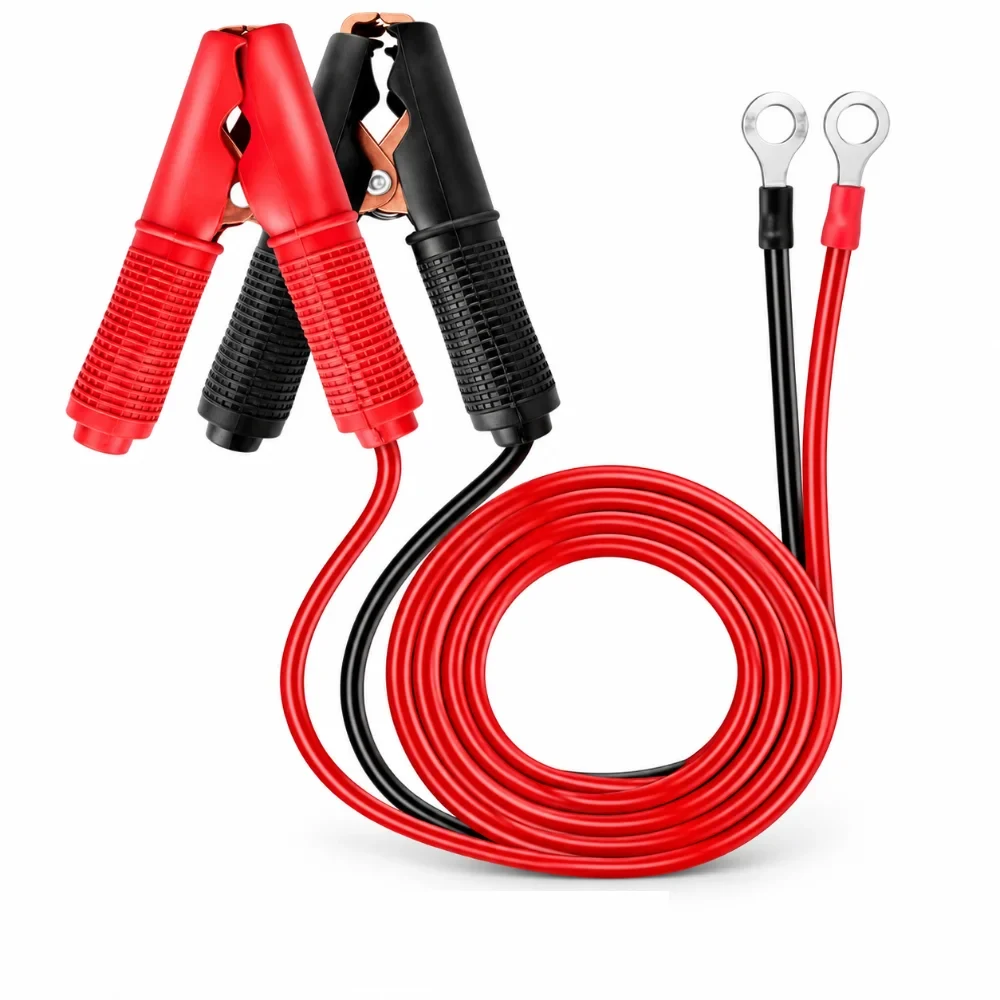 12V Battery Clip Cable with 30 A FuseClips, fuse, and ring terminals. Power a pump from any 12V battery.View product →
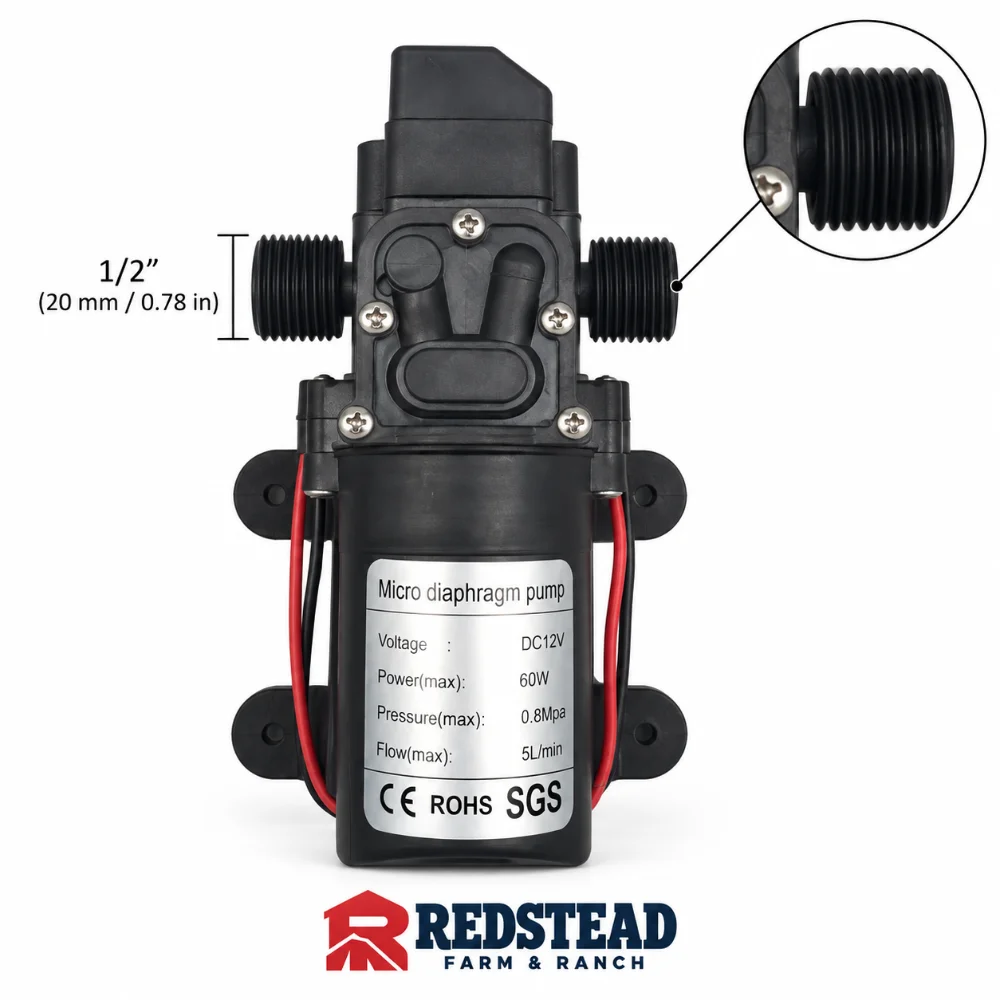 GOODPUMPS Compact 12V Water PumpSelf-priming diaphragm pump, 1.3–1.6 GPM, about 5–6 A.View product →
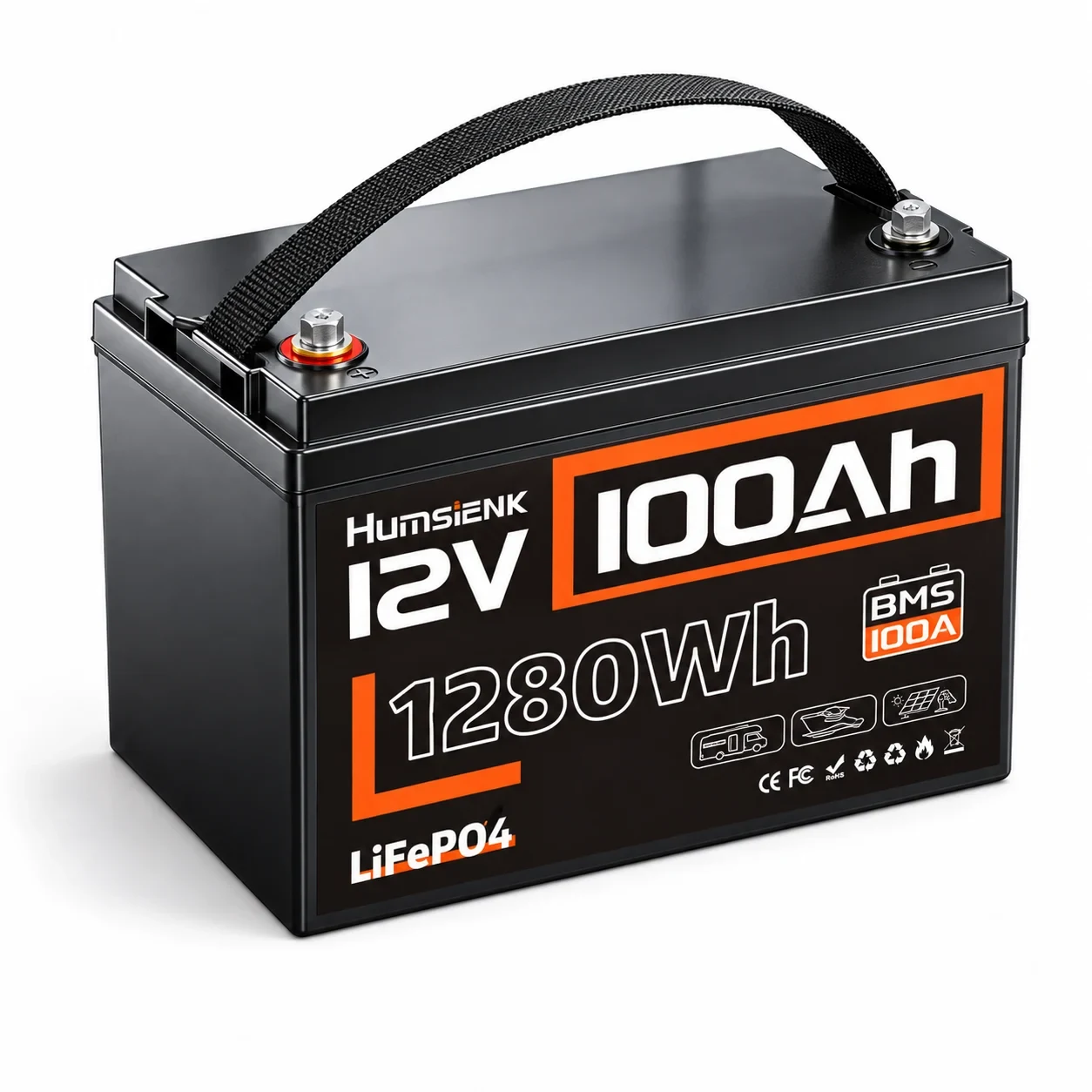 12V 100Ah Lithium BatteryAbout 20 hours of the Compact pump on one charge.View product →
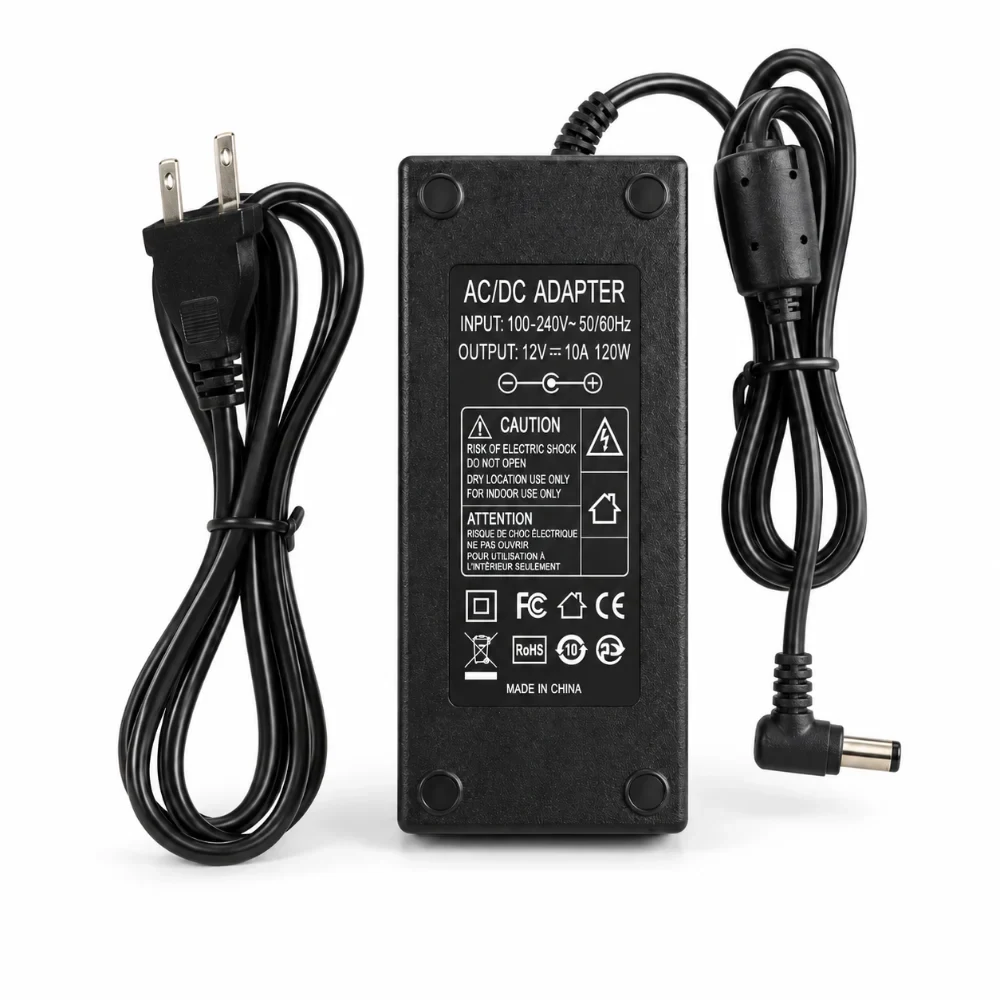 110V to 12V Power Supply, 10 ARun a 12V pump from a wall outlet, no battery needed.View product →
Questions
Can I connect a 12V water pump straight to a battery?
Yes. Red to positive (+), black to negative (−), with a fuse on the red wire close to the battery. The fuse is what makes a direct connection safe. Without one, a pinched wire can overheat.
Do I need a switch?
For a portable pump on a clip cable, unclipping the battery is your switch. For a pump that stays wired in, add a 12V DC switch on the red wire after the fuse. Pumps with a pressure switch (like the Compact C and D and the Heavy-Duty) stop by themselves when you close the outlet, but you still want a way to cut the power when you walk away.
What size fuse do I need?
About 1.25 to 1.5 times the pump's running amps, and never bigger than the wire can carry. A 5–6 A pump uses a 10 A fuse, a 10 A pump a 15 A fuse, and an 18 A pump a 25–30 A fuse.
What gauge wire should I use?
It depends on amps and distance. For a 5–6 A pump, 14 AWG up to about 10 ft from the battery and 12 AWG up to about 20 ft. For a 10 A pump, 12 AWG up to 10 ft and 10 AWG up to 20 ft. Thicker is always fine.
Can I run a 12V pump on 24 volts?
No, not a 12V-only pump: 24V can burn out the motor. If your system is 24V, use a pump rated for it, like our 6–24V submersible or the 24V version of our deep well pump.
Can I use a car battery?
Yes, for a few hours at a time. Car batteries are made for starting engines, so recharge it after use and don't run it flat. For all-day pumping, a deep-cycle or lithium battery lasts much longer.
More guides
- Best 12V pump for a sprayer tank →
- How to pump water from a pond, creek, or rain barrel to your garden →
Not sure which pump or fuse?
Tell us what you're pumping and how far. We'll help you pick. Email [email protected] or text (703) 843-6988.
Shop 12V pumps · Free U.S. shipping